.png)

La Serena was the meeting point for the discussion on energy innovation in Latin America and the Caribbean

With support from the Latin American Energy Organization (OLADE), Chile’s Ministry of Energy, universities, and the Chilean technology company Suncast, the event held during X Week Energy gathered international experts to analyze the challenges and opportunities of the region’s energy transition.
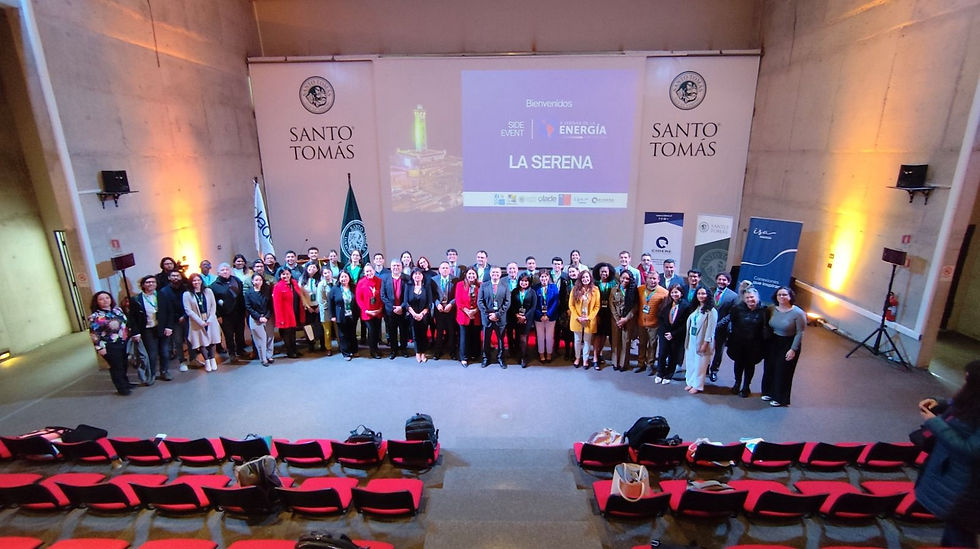
This past 26th of September, in the context of X Week Energy, organized by the Latin American Energy Organization (OLADE), which is being held in Santiago de Chile, the international academic event “Connecting Minds, Energizing the Future” took place in the city of La Serena.
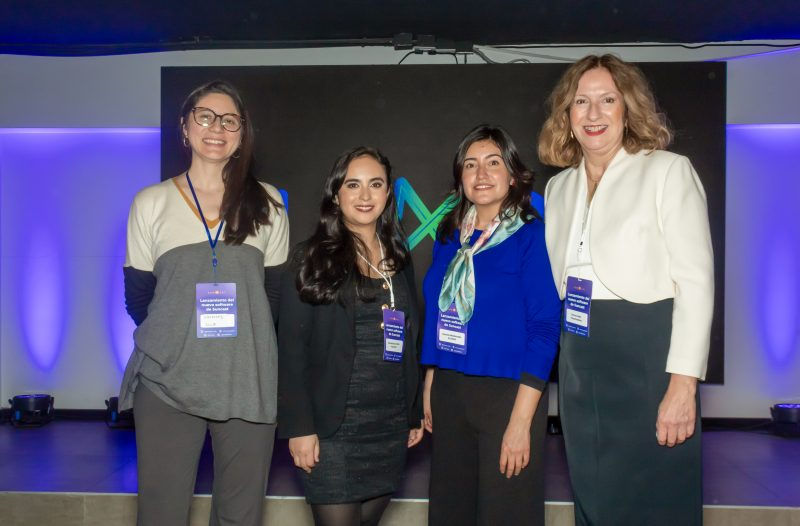
In this context, Stefany Castillo González, Suncast’s Manager of Talent and International Expansion, was responsible for moderating the academic panel: “Innovation, artificial intelligence and new technologies”. The meeting gathered international specialists to debate on the role of academia and research in designing a cleaner, more efficient, and resilient energy matrix for Latin America, and how the global energy transition, accelerated by the necessity to mitigate climate change, finds its most promising allies in new technologies.
The event was organized in collaboration with Universidad Santo Tomás, ISA Energía, Cidere Coquimbo, Coquimbo’s Regional Government, and Chile’s Ministry of Energy, which focused on the role of higher and technical-vocational education in promoting innovation, technology transfer, and human capital formation for an inclusive energy transition.
Academic panel: Innovation, artificial intelligence, and new technologies
The conversation panel featured the participation of Carlos Naranjo (Escuela Politécnica Nacional, Ecuador), and (Universidad Católica del Norte, Chile), Astrid Aguilera (GESENE, Universidad de Paraíba, Brazil), and Dario Bove (Università di Genova, Italy). Each speaker provided their perspective based on teaching and research, emphasizing the importance of academia as the pillar of knowledge and a space where innovative solutions are born to tackle the region’s energy challenges.
In this context, Stefany Castillo González, highlighted that the Region’s energy future will depend on the strategic collaboration between academia, the public sector, and industry: “The key is in building more dynamic and resilient energy ecosystems that can adapt to consumption changes and the effects of climate change”.

Regarding the collaboration possibilities between academia and the industry, the expert added that “The opportunities are in opening more spaces for conversation between academia and the industry. If we manage to encourage the industry to share its data, use cases, and specific problems, and academia to study them and develop solutions, we will be able to significantly reduce development periods for new technologies. These solutions must be not only technical, but also consider social aspects of energy, and in some cases, even international affairs. In addition, something that was emphasized throughout the day was that today’s students will be a part of the industry in a few years; for this reason, it is essential to provide information and context about the sector, for them to apply innovative solutions and actively contribute to the energy transition”.
From a European perspective, scholar Dario Bove shared applicable experiences for the Latin American and Caribbean Regions: “In Europe, I have witnessed that the energy transition progresses quickly when there are clear rules and simple tools, such as competitive bidding and long-term contracts for renewable energy. These mechanisms reduce risks and allow funding to be more accessible even to the smallest or local operators. A similar approach would provide stability and release the Region’s vast solar and wind potential.”
Also, he emphasized the role of corporate research and start-ups: “Internal research allows companies to transform emerging technologies into practical solutions before challenges become critical, as I have observed in fuel cells and sustainable pyrolysis processes. The development of prototypes and industrial experimentation reveals real-world limitations that theory cannot capture on its own. Linking corporate R&D with universities and start-ups accelerates innovation and reinforces energy resilience.”
The panel concluded with a shared reflection: academia must not only respond to current challenges, but also take part in the future through research, innovation, and the education of professionals in order to prepare them to lead the energy transition in Latin America and the Caribbean.

Comments